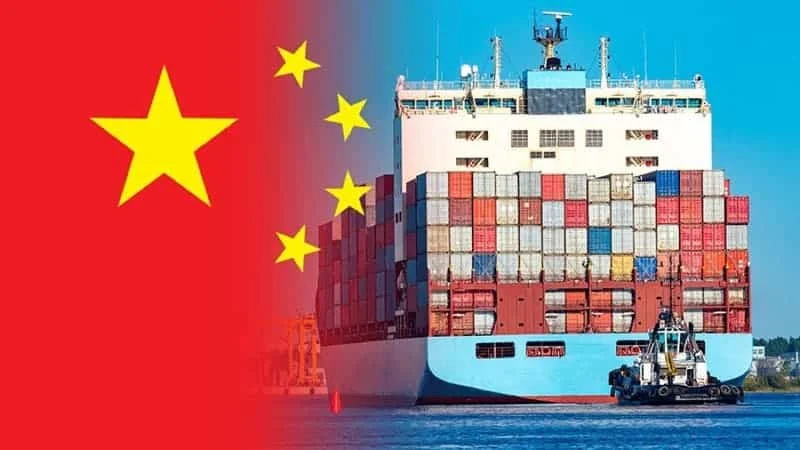
A headline announcing a “revised foreign trade law” might seem destined for obscurity—bureaucratic housekeeping relegated to policy journals and academic conferences. However, China’s latest revision to its Foreign Trade Law, passed by the National People’s Congress Standing Committee on December 27, 2025, and set to take effect on March 1, 2026, represents far more than routine legal maintenance.
This comprehensive overhaul—expanding the law to 11 chapters and 83 articles—represents a strategic inflection point in how the world’s second-largest economy intends to navigate an increasingly fractured global trading system. First enacted in 1994 during China’s early “opening up” period and last significantly revised in 2004 following its accession to the World Trade Organization, this new version emerges from a fundamentally different context: serious internal economic challenges, mounting geopolitical tensions, and a strategic imperative to reduce dependence on Western-dominated trade architectures.
Part I: The Economic Emergency Behind the Legal Language
The timing of this comprehensive legal overhaul is no coincidence. While Chinese officials frame the revision in diplomatic language about “profound changes” and “restructuring international rules,” the immediate catalyst is far more urgent: China’s industrial sector is experiencing significant distress.
Industrial Profits in Steep Decline
According to Bloomberg and data from China’s National Bureau of Statistics, the country’s industrial engine—long the bedrock of its economic miracle—is showing alarming signs of strain. The numbers paint a stark picture of deteriorating corporate health across China’s manufacturing heartland.
November 2025: Industrial profits plummeted by 13.1% year-over-year, accelerating sharply from October’s 5.5% decline. This marked the steepest monthly contraction in over a year, signaling not just cyclical weakness but structural challenges in demand.
Cumulative Performance (January–November 2025): For the first 11 months of 2025, total industrial profits reached 6.63 trillion yuan, up a mere 0.1%—a dramatic slowdown from earlier in the year’s 1.9% growth rate, representing effectively flat performance that fails to keep pace with inflation or investment needs.
Sectoral Divergence: The pain is not evenly distributed. While high-tech manufacturers in aerospace and electronics posted profit gains of 15%, traditional heavy industries are suffering. The mining sector, in particular, is experiencing double-digit losses as commodity deflation and overcapacity bite hard.
According to NewsBytes reporting, Chinese companies are grappling with what economists term “nasty industrial deflation”—a toxic combination of weak domestic consumer demand, excess production capacity, and falling prices that squeeze profit margins relentlessly. This economic pain creates a political imperative: Beijing must demonstrate it can protect struggling industries while charting a path to higher-value economic activities.
Part II: Forging a Legal Shield and Sword for Trade Disputes
The revised law exhibits a clear dual nature, creating both defensive mechanisms to protect Chinese industries and offensive capabilities to project influence in global trade governance. This two-sided approach reflects Beijing’s recognition that in the current geopolitical environment, economic statecraft requires both the capacity to defend against coercion and the ambition to shape the rules of engagement.
The Shield: Defensive Legal Fortifications
The law significantly enhances China’s defensive posture through several interconnected mechanisms designed to provide legal cover for state intervention in trade flows. The revision, as Bloomberg notes, empowers policymakers to legally retaliate against trading partners that attempt to limit China’s exports.
China.org.cn reports that the law mandates China will “strengthen intellectual property protection related to foreign trade” and “enhance the compliance and risk response capabilities of foreign trade operators regarding intellectual property rights.” While this appears to align with international norms, it serves a dual purpose: demonstrating compliance with high-standard trade agreement requirements while also providing a legal framework to challenge foreign firms accused of IP violations.
The Sword: Offensive Rule-Making Ambition
Beyond defense, the law outlines an ambitious agenda for China to transition from rule-taker to rule-maker in the international economic order. According to Xinhua News, the law mandates efforts to “actively align with high-standard international economic and trade rules.”
More provocatively, People’s Daily reports the law explicitly directs Chinese officials to “participate in the formulation of international economic and trade regulations.” This is not about joining multilateral forums as a passive participant; it is about actively shaping the content and direction of those rules.
Part III: The CPTPP Audition—Strategic Positioning for Major Trade Blocs
Beneath the legal technicalities lies a clear geopolitical gambit: this law is a comprehensive audition for membership in the Comprehensive and Progressive Agreement for Trans-Pacific Partnership (CPTPP), one of the world’s most significant trade blocs.
Why CPTPP Membership Matters
China formally applied to join CPTPP in September 2021, as reported by the Center for Strategic and International Studies. For China, gaining admission would represent a strategic triumph on multiple fronts.
According to China’s Ministry of Commerce, CPTPP membership would reduce economic dependence on the United States and European Union by deepening integration with major Asia-Pacific economies. Ministry spokesperson He Yadong stated that China’s accession would boost member countries’ GDP by 0.2% to 1.1%, increase exports by 2.5% to 11.8%, and expand international trade by 2.8%.
Part IV: Global Impact Analysis—How This Law Affects Major Economies
The revised Foreign Trade Law does not exist in isolation; its effects will ripple through the global economy, creating distinct challenges and opportunities for different regions and nations.
United States: Strategic Competition Intensified
The law arrives amid what the U.S. Congressional Research Service describes as China’s growing assertiveness in “advancing and aligning China’s national economic security tools to seek global economic, technology, and military leadership.” The law’s provisions for retaliation directly target U.S. export control measures.
According to Congressional analysis, “the PRC government controls or influences the purchase, financing, and price of the top U.S. exports to China—aircraft, semiconductors, medical equipment, agriculture, and energy.” In 2025 alone, according to U.S. Trade Representative reporting, the bilateral trade relationship has shifted “from a relatively stable economic complementary relationship to strategic confrontation under high tariff barriers.”
European Union: Carbon Border and Digital Trade Tensions
The law’s green trade provisions are designed explicitly to counter the EU’s Carbon Border Adjustment Mechanism (CBAM), according to analysis by Ainvest. China is “promoting green product standards, certification systems, and carbon accounting alignment with international norms” to ensure its exporters can comply with EU requirements while maintaining competitiveness.
Japan and Asia-Pacific: CPTPP Membership Implications
For Japan and other CPTPP members, the law presents a strategic dilemma. Reuters reporting notes that China is “overhauling its trade-related legal frameworks partly to convince members of a major trans-Pacific trade bloc created to counter China’s growing influence that the manufacturing powerhouse deserves a seat at the table.”
Global Trading System: WTO Implications
The U.S. Trade Representative’s 2025 Trade Policy Agenda notes that “the WTO is poorly suited to the challenges of this era, with no better example of this failing than the inability of the WTO’s monitoring, dispute settlement, and multilateral negotiating functions to address the challenges posed by China’s non-market policies and practices.”
Conclusion: A Dynamic Playbook for Economic Competition
China’s 2026 Foreign Trade Law is far more than legal housekeeping. It is a comprehensive strategic document that reveals Beijing’s intentions for the next phase of global economic competition. The law simultaneously addresses immediate economic pain (industrial profit declines, weak demand), positions China for membership in high-standard trade pacts (CPTPP), and establishes legal foundations for future dominance in digital and green commerce.
Most importantly, the law signals China’s determination to transition from rule-taker to rule-maker. Beijing is no longer content to operate within an international economic architecture designed in Washington, Brussels, and Geneva. It intends to help write the rules governing 21st-century commerce, particularly in emerging domains where global standards remain contested.
References & Sources
Official Chinese Government Sources:
- Xinhua News Agency: China Adopts Revised Foreign Trade Law (December 27, 2025)
- China.gov.cn: China Adopts Revised Foreign Trade Law
- China.org.cn: China Adopts Revised Foreign Trade Law (December 27, 2025)
- People’s Daily Online: China Adopts Revised Foreign Trade Law
Economic Data & Analysis:
- National Bureau of Statistics of China: Official Press Releases
- Bloomberg: China Industrial Profits Decline in November (December 27, 2025)
- Business Standard: China Industrial Profits Tumble at Fastest Pace in a Year (December 27, 2025)
Global Impact & International Relations:
- U.S. Congressional Research Service: China’s Recent Trade Measures and Countermeasures
- U.S. Congressional Research Service: U.S.-China Trade Relations
- U.S. Trade Representative: 2025 Trade Policy Agenda and 2024 Annual Report
- Ainvest: China’s Revised Foreign Trade Law and Its Implications for Global Trade and Investment
- Investing.com/Reuters: China Passes Revised Foreign Trade Law to Bolster Trade War Capabilities
Subscribe to Aniketh Focus for comprehensive analysis on global trade, geopolitical developments, and economic trends shaping the future of international commerce.
Good